Royal Enfield Hunter 350 2026 targets young riders
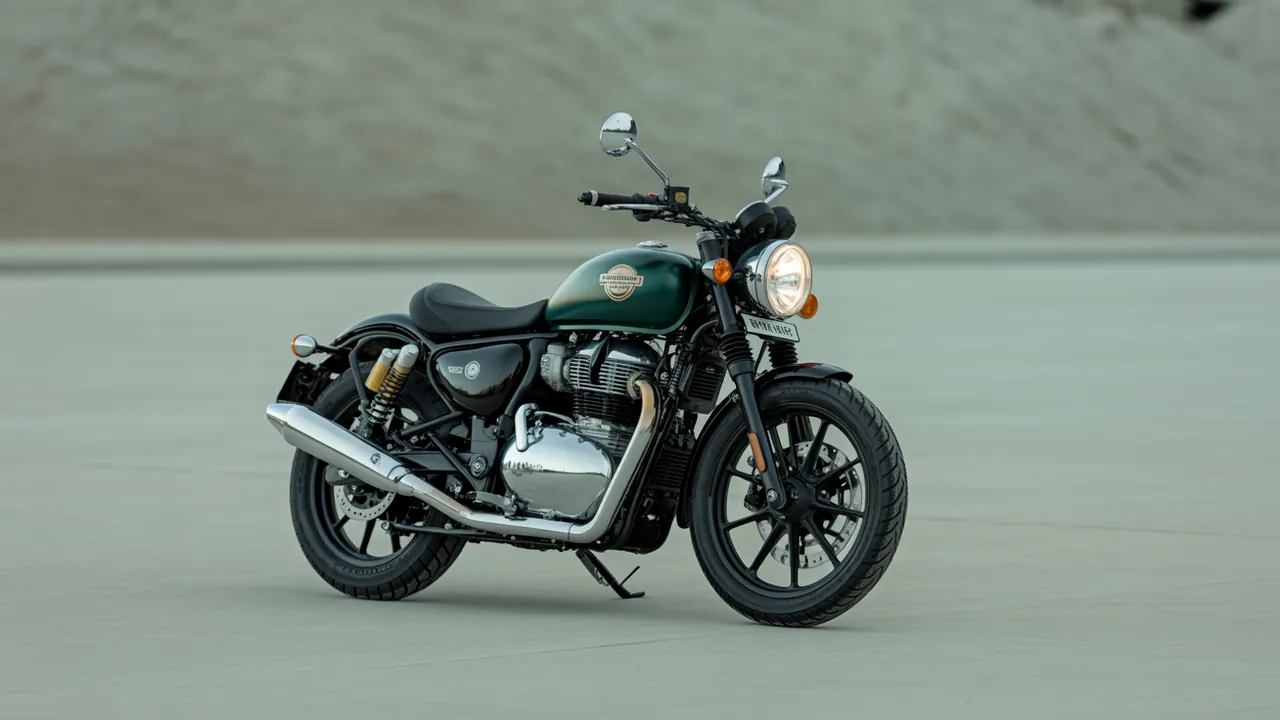
Royal Enfield’s Hunter 350 has been one of the brand’s more youth-focused motorcycles in recent years. A 2026 version, referred to by many riders and dealers as the “Hunter 350 2026,” is drawing attention for two key claims: a lightweight feel in city use and a fuel efficiency figure said to be around 40 kmpl under suitable riding conditions.
The motorcycle sits in the company’s 350cc lineup, a space that also includes other models built on similar foundations. For many buyers, the Hunter series is positioned as a practical, everyday option with a modern look and easier handling than heavier, more classic-styled motorcycles.
Focus on light handling for daily riding
One of the main talking points around the Hunter 350 2026 is its “lightweight feel.” In real-world terms, this typically refers to how the bike behaves at low speeds, during quick turns, and while filtering through traffic. Even if the overall weight is not dramatically different from earlier versions, small changes in balance, seat height, handlebar position, and tyre choice can make a motorcycle feel easier to manage.
For younger and first-time riders, that ease of use can matter as much as headline numbers. In many cities, a bike that feels manageable at 20 to 40 km/h, and is stable during sudden braking, may be preferred over a machine that feels solid only on open highways.
Riders who spend most of their time commuting often look for a motorcycle that is not tiring to use. A lighter feel can reduce stress during U-turns, parking, or stop-and-go traffic. It can also help shorter riders who want more confidence when putting a foot down at signals.
Mileage claim of around 40 kmpl
The other number being widely discussed is fuel efficiency of about 40 kmpl. Mileage can vary based on riding style, road conditions, traffic, tyre pressure, and maintenance. The same motorcycle can return very different results depending on whether it is ridden gently in a steady gear or pushed hard with frequent acceleration.
Still, a figure near 40 kmpl is seen as attractive in the 350cc segment, where buyers often expect a balance of performance and running costs. For many young riders, fuel expenses are a major part of monthly ownership costs. A small improvement in efficiency can add up over long commutes.
Industry watchers also point out that mileage depends not only on the engine, but also on factors like gearing, weight, aerodynamics, and how well the fuel injection system is tuned for everyday riding. If the 2026 Hunter keeps a similar power output while improving efficiency, it could strengthen its appeal in the value-focused mid-capacity market.
What the Hunter 350 is known for
The Hunter 350 has generally been presented as a roadster-style motorcycle designed mainly for urban use. It typically combines a compact stance, upright ergonomics, and a simpler design language compared to the brand’s more retro-heavy models.
Many riders choose this type of bike for its mix of style and practicality. It is often used for daily office commutes, college travel, and weekend rides. The Hunter has also built a following among riders who want a Royal Enfield badge without moving to larger, heavier motorcycles.
In a market where design matters, the Hunter’s smaller proportions and modern touches have been positioned to match younger tastes. Buyers in this group often want a motorcycle that looks good in photos, has a strong brand identity, and still remains easy to live with.

Engine and performance expectations
While detailed specifications for the 2026 model may vary by market and final release details, the Hunter 350 is associated with Royal Enfield’s 350cc platform used across multiple bikes. This engine family is generally tuned for smooth, steady torque rather than high-rev racing performance.
For daily riders, that approach can be useful. Strong low- and mid-range power helps in city traffic, where quick overtakes happen at moderate speeds. It also supports relaxed cruising without constant gear changes.
Young riders moving up from 100cc to 200cc motorcycles often look for a bike that feels more premium but does not demand aggressive riding to be enjoyable. A tractable 350cc motor can meet that need by offering a calm, controlled ride with enough power for longer routes.
Comfort and ergonomics for new riders
Comfort is a key part of how a motorcycle is judged by everyday owners. The Hunter’s general layout is meant to support upright posture, which can reduce strain on wrists and shoulders during longer city commutes. Seat comfort and suspension tuning also influence whether a motorcycle feels like a good daily companion or a tiring machine.
If the 2026 version continues the same approach, buyers can expect a setup aimed at mixed road conditions, including broken patches, speed bumps, and uneven surfaces. A balanced suspension can help keep the bike stable without making it feel too soft during cornering.
For young riders who may share the bike with family members, approachable ergonomics can broaden the model’s usefulness. A bike that feels easy for both the owner and occasional riders in the household often has stronger resale value as well.
Features that matter to younger buyers
Younger motorcycle buyers tend to compare products based on features as well as brand image. In this category, the most valued features usually include clear instrument displays, strong lighting for night use, smartphone-friendly navigation options where available, and safety aids such as ABS.
In addition, buyers increasingly pay attention to how a motorcycle feels in day-to-day life. Smooth throttle response, predictable braking, and manageable clutch action are all details that influence whether a rider feels comfortable in dense traffic.
Another factor is customization. Many young owners like to add accessories such as seats, mirrors, guards, and luggage options. Models that support official accessories, or have a strong aftermarket ecosystem, often become popular choices for personalization.
Pricing and competition in the 350cc space
Pricing for the Hunter 350 2026 will depend on variant and region. In general, the Hunter line has been positioned as a more accessible entry into the Royal Enfield range. That strategy places it in competition with other mid-capacity street motorcycles that target first-time premium buyers.
Competitors may include bikes that offer different strengths, such as lighter kerb weight, more sporty performance, or additional technology features. Royal Enfield’s advantage has often been its brand identity and the feel of its engine character, which some riders prefer over higher-revving alternatives.
For buyers comparing options, test rides and running cost estimates can be decisive. If the 2026 Hunter consistently delivers mileage near the reported 40 kmpl in real conditions, it may attract riders who want the “bigger bike” experience without a big increase in fuel spending.
Availability and what to watch next
Interest in the Hunter 350 2026 suggests that the market continues to move toward motorcycles that mix style, manageable handling, and reasonable fuel efficiency. Buyers and dealers will likely watch for confirmed specifications, variant details, color options, and any changes in equipment or tuning.
Potential customers are also expected to look for independent road tests to verify mileage claims and to understand how the motorcycle performs in traffic, on highways, and on rough roads. Real-world ownership reports usually provide a clearer picture than early marketing discussions.
As more information becomes available, the key question will be whether the Hunter 350 2026 can maintain the model’s city-friendly nature while meeting rising expectations for efficiency and comfort.
FAQs
1) Is the Royal Enfield Hunter 350 2026 a new model or an update?
It is being discussed as a 2026 version of the Hunter 350, suggesting an updated edition rather than a completely different motorcycle, though final details depend on the official release.
2) Can the Hunter 350 2026 really give 40 kmpl mileage?
Mileage can vary widely. A figure around 40 kmpl may be possible under steady riding conditions, but results depend on traffic, speed, maintenance, and riding style.
3) Why is it described as having a “lightweight feel”?
The phrase usually refers to easy low-speed handling, balanced ergonomics, and confidence in traffic, not only the bike’s actual weight on a scale.
4) Who is the Hunter 350 2026 best suited for?
It is generally aimed at young riders and urban commuters who want a stylish 350cc motorcycle that is easy to manage and economical to run for its class.