Toyota Land Cruiser 300 2026 targets luxury buyers who still want real off-road strength
The Toyota Land Cruiser 300 returns for the 2026 model year with a familiar message: premium comfort on the road, strong capability away from it, and a reputation for durability that Toyota has promoted for decades. The latest version continues the Land Cruiser’s shift toward a luxury-focused SUV while keeping the hardware and design cues that helped the nameplate build trust in demanding conditions.
In many markets, the Land Cruiser 300 sits near the top of Toyota’s SUV range. It competes in a space where buyers expect quiet cabins, modern screens, and advanced driver aids, but also want high towing potential and confidence on rough tracks. Toyota’s updates for 2026 are positioned as reinforcements rather than a full redesign, keeping the core formula intact.
A design that signals size, capability, and status
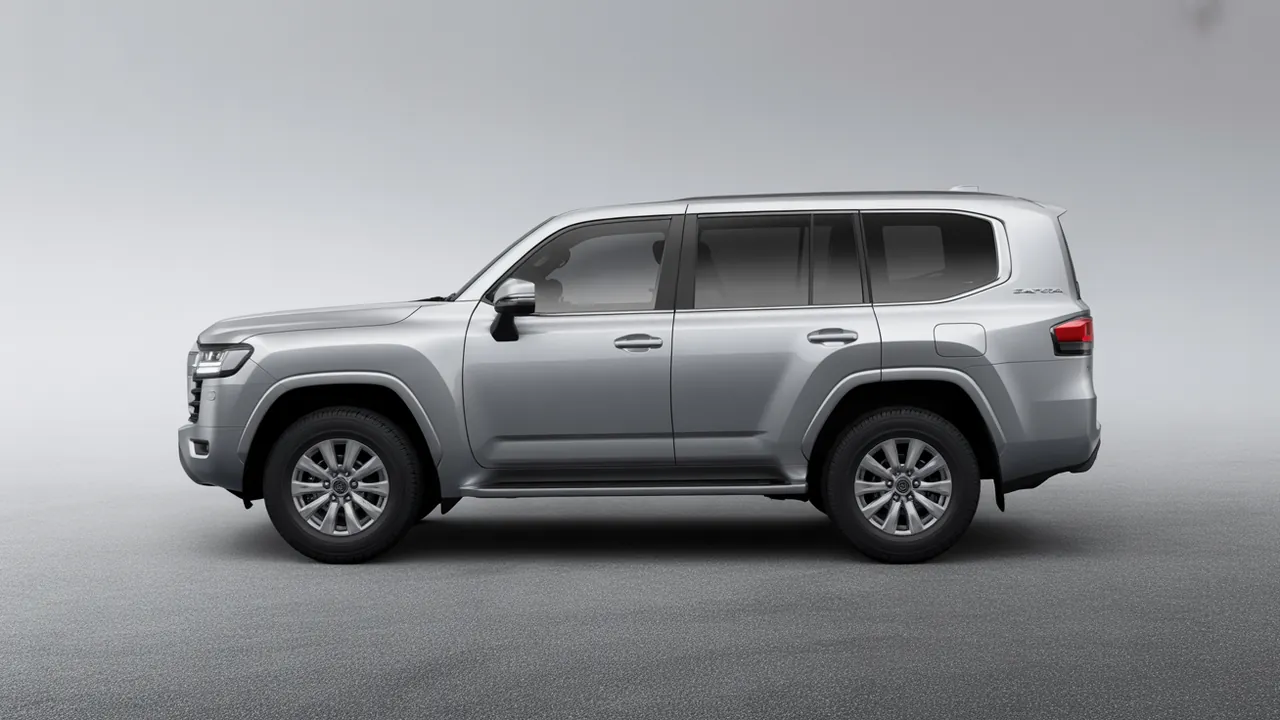
The Land Cruiser 300 has a tall stance, wide body, and upright shape that prioritize visibility and interior space. For 2026, the model continues with a look that blends luxury and utility. Large grille openings, strong shoulder lines, and short overhangs remain key visual elements. Wheel designs and trim-specific exterior details help differentiate higher-end grades.
Depending on the market and trim, the SUV is typically offered with premium exterior touches such as LED lighting, chrome or dark accents, and larger wheels. These features are aimed at buyers who want the Land Cruiser to function as a family vehicle and a statement vehicle, not only as a tool for remote travel.
Interior focus: comfort, tech, and practical space
Toyota’s Land Cruiser 300 is widely known for offering a more upscale cabin than older Land Cruiser generations. For 2026, the vehicle continues to emphasize comfort with soft-touch surfaces, available leather upholstery, and multiple seating configurations. Many versions are sold with three rows, supporting larger families or group travel.
Cabin layout typically balances touchscreen functions with physical controls for key tasks. In off-road use, simple buttons and knobs can be easier to manage than deep menu systems. Storage spaces, cup holders, and rear cargo flexibility remain central to the Land Cruiser’s everyday appeal.
Infotainment and connectivity features can vary by region. In many markets, buyers expect smartphone integration, navigation options, and multiple USB charging points. Higher trims may also include premium audio systems and added comfort features for rear passengers.
Powertrain approach: strong performance, refined driving
The Land Cruiser 300 is commonly associated with turbocharged engines in recent years, paired with an automatic transmission. Toyota has aimed for a balance of torque for towing and climbing, along with smoother on-road response than older, heavier-feeling SUVs.
Exact engine choices and outputs often depend on the country and emissions requirements. Toyota typically offers powertrains that prioritize durability and long-term serviceability, especially in regions where Land Cruisers are used for work, long-distance driving, and travel far from major cities.
On paved roads, the Land Cruiser 300 is designed to feel stable at speed and calm over bumps. Steering, braking, and suspension tuning are intended to support a wide range of uses, from daily commuting to long highway trips with passengers and luggage.

Off-road systems keep the Land Cruiser identity
Even as the Land Cruiser has moved into the luxury category, it continues to be marketed as a serious off-road vehicle. Key selling points often include full-time four-wheel drive, traction-focused driving modes, and chassis systems built to handle uneven terrain.
In many versions, Toyota includes features designed to help drivers maintain control on loose surfaces. Depending on trim and market, these may include terrain selection modes, hill ascent and descent aids, and low-range gearing for slow-speed crawling. Some models also offer systems that adjust suspension or stability settings to support different trail conditions.
Ground clearance, approach angles, and underbody protection remain important parts of the package. Buyers who use the Land Cruiser for overlanding and remote touring often look for strong recovery points, durable components, and the ability to carry extra fuel, water, and gear.
“Legendary durability” remains a central message
Toyota’s durability reputation is a key reason the Land Cruiser name has maintained demand. For decades, Land Cruisers have been used by government fleets, businesses, and private owners in harsh climates. The 2026 Land Cruiser 300 continues to lean on that history, presenting itself as a premium SUV that can still handle tough treatment.
Durability, however, is not only about surviving off-road trips. For many owners, it also means dependable daily operation, long service life, and strong resale value. Toyota’s global network and parts availability in many regions support that image, though ownership experience can vary by location.
The Land Cruiser’s reputation is also tied to engineering choices such as robust frames or structures, cooling capacity designed for heat and load, and driveline components built for repeated stress. Toyota has not positioned the 2026 model as a radical change, which can reassure buyers who prefer proven designs over experimental ones.

Safety and driver assistance: expected features for a luxury SUV
In the luxury off-road segment, safety technology is no longer optional for many buyers. The Land Cruiser 300 is typically offered with a suite of driver-assistance features, which may include automatic emergency braking, adaptive cruise control, lane support systems, and blind-spot monitoring.
Availability and naming of these systems can differ by market. Some regions also require specific safety equipment. For buyers, the key question is how well these features work in real use, especially in a large vehicle that may be driven in traffic, on highways, and on narrow rural roads.
Market position: premium pricing and strong demand in key regions
The Land Cruiser 300 is often priced as a high-end SUV, and in some markets it has faced supply limits and waiting lists. Demand can be driven by the model’s status, its perceived reliability, and its ability to serve multiple roles. Buyers may use it as a family vehicle during the week and as a travel or towing vehicle on weekends.
Competition depends on the region but can include other large SUVs from Japanese, American, and European brands. Many rivals focus heavily on luxury and technology, while the Land Cruiser attempts to combine upscale features with a more traditional off-road and durability identity.
Toyota’s 2026 strategy appears to be steady continuity. The company is reinforcing a long-standing message: the Land Cruiser is meant to be comfortable enough for luxury customers, while still being engineered for difficult roads and long-term ownership.
What to watch as details emerge
As with many global vehicles, final specifications for the Land Cruiser 300 2026 can differ across regions, including engine choices, feature lists, and trim names. Buyers and industry watchers will likely focus on pricing, availability, and any updates to infotainment, safety tech, and off-road hardware.
For Toyota, the challenge is to keep the Land Cruiser’s core identity while meeting modern expectations for comfort, emissions compliance, and digital features. The 2026 model’s message is clear: luxury is part of the package, but durability and off-road credibility remain the headline.
FAQs
1) Is the Toyota Land Cruiser 300 2026 a new generation?
The 2026 model is generally presented as a continuation of the current Land Cruiser 300 line rather than a full new-generation redesign, though equipment and trim details can change by market.
2) Does the Land Cruiser 300 still offer serious off-road capability?
Yes. The Land Cruiser 300 remains positioned as a capable off-road SUV, typically offering four-wheel drive systems and driver aids designed for low-traction conditions.
3) Will engine and feature options be the same in every country?
No. Engine choices, safety equipment, and infotainment features often vary by region due to regulations, supply, and local buyer preferences.
4) Why is “durability” such a major focus for the Land Cruiser?
The Land Cruiser name has a long history in harsh environments and fleet use. Toyota continues to market the model on long-term reliability, toughness, and resale value, alongside luxury features.